2026 Michigan Heat Pump Rebates and Financing Options
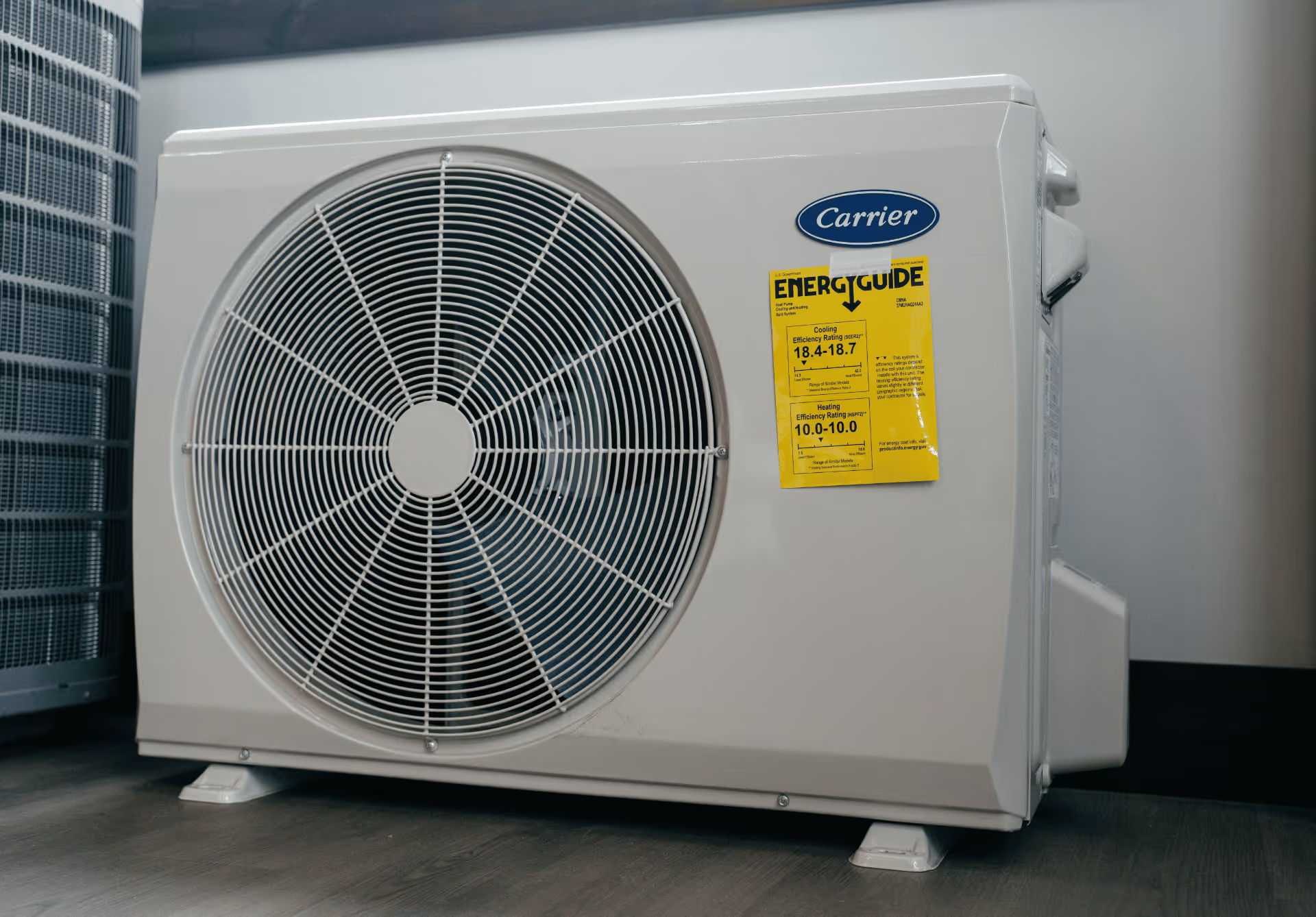
A heat pump can lower your energy bills for years, but the programs that help pay for one changed in 2026. The federal tax credit many homeowners counted on is gone, and the savings have shifted to state and utility programs instead. Knowing where those dollars come from now helps Northern Michigan homeowners plan an upgrade with an accurate budget.
What Changed in 2026
The federal 25C tax credit that offset heat pump costs expired at the end of 2025. For a system installed in 2026, that credit is no longer on the table. If your equipment was installed and running on or before December 31, 2025, you may still be able to claim it on your 2025 return, but new installs this year do not qualify. The upside is that Michigan and its utilities have picked up much of the slack.
Michigan Home Energy Rebates
Michigan's Home Energy Rebates program is the anchor of heat pump savings this year. It offers substantial rebates on qualifying heat pumps, with the largest amounts reserved for income qualified households. Unlike a tax credit, these rebates are built to lower the upfront cost of the system rather than making you wait until tax season. The exact amount depends on your household income and the efficiency of the equipment you choose.
Utility Rebates
Your utility may add its own rebate on top of the state program. These are tiered, which means the higher the efficiency of your system, the larger the rebate. Cold climate and ductless models often earn the top tier because they perform well in our winters. Utility programs change from year to year, so it pays to check what is available at the time you install.
Financing That Spreads the Cost
Even with rebates, a new system is a real investment. Low interest financing through programs such as Michigan Saves can turn the remaining balance into predictable monthly payments through approved contractors. That makes the difference between a system you have been putting off and one you can move on this year. Financing also stacks with rebates, so you can apply the rebates first and finance the rest.
How the Savings Stack
The programs above are designed to work together rather than compete. A typical path looks like this:
- Apply state rebates to bring down the base cost of a qualifying heat pump.
- Add a utility rebate based on the efficiency tier of the equipment.
- Finance any remaining balance through a low interest program.
Stacked correctly, these can take a meaningful share off the total, especially for income qualified homes and high efficiency systems.
Who Qualifies and What to Have Ready
Eligibility depends mostly on household income and the equipment you select. To move quickly when you are ready, it helps to have recent proof of income, your utility account details, and a quote for a qualifying system. Because the rules and funding levels shift over time, current information matters more here than with most home projects. A contractor who works with these programs regularly can confirm what you qualify for before you commit.
Choosing the Right System
Incentives are only part of the decision. Whether a heat pump is the right heating and cooling choice depends on your home's insulation, existing ductwork, and current equipment. Our guide on cold climate heat pumps walks through how these systems perform in Northern Michigan winters and when they make sense. For homes without ducts, a ductless mini split is often the simplest path.
Beyond the Rebates: Long Term Savings
Incentives lower what you pay up front, but the reason a heat pump makes sense goes further than the rebate. Because the system moves heat instead of burning fuel, it runs efficiently across most of the heating season, and it replaces both your furnace and your air conditioner with one machine. That means one system to maintain instead of two, and cooling that comes built in rather than as a separate purchase. Over the years the equipment runs, those efficiencies add up alongside the money the rebates saved you at installation.
Why Timing Matters This Year
Rebate programs run on set budgets and defined rules, and both can change from one year to the next. Funding for a popular program can run low as more households apply, and the amounts or eligibility can shift when a program is renewed. That is not a reason to rush a poor decision, but it is a reason not to sit on a good one. If a heat pump is already on your list, understanding this year's programs while they are active helps you capture savings that may look different next year.
What the Process Looks Like
Planning an upgrade around incentives is more straightforward than it sounds. It usually starts with an assessment of your home and current system, followed by a recommendation for equipment that both fits your comfort needs and qualifies for the available programs. From there, the rebates and any financing are lined up before the work begins, so you know your real cost going in. A contractor familiar with the programs handles much of the detail, which keeps the paperwork from becoming a barrier.
Local Utilities and Extra Programs
Beyond the statewide rebate, it is worth asking about programs specific to your utility and county. Some utilities run seasonal promotions, and certain equipment brands offer their own limited rebates that a contractor can flag at quote time. None of these are guaranteed, and they come and go, which is the point: a quick check for current local offers when you are ready to buy can turn up savings that were not there a year earlier. Bundling whatever applies is how homeowners get the most off the final price.
Frequently Asked Questions
Can I still get a federal tax credit for a heat pump in 2026?
No. The federal 25C credit expired at the end of 2025 and does not apply to systems installed in 2026. Homeowners with a qualifying 2025 install may still claim it on their 2025 tax return.
Do the state and utility programs really stack?
Yes. Michigan's rebate program, utility rebates, and low interest financing are meant to be combined. Applying rebates first and financing the rest is a common approach.
How much can I actually save?
It varies by household income, the equipment you choose, and your utility. Income qualified households installing high efficiency or cold climate systems tend to see the most, so a personalized estimate is the only reliable number.
Do I have to apply for the rebates myself?
A contractor who works with these programs can guide you through eligibility and paperwork. Bringing your income details, utility account, and a system quote makes the process faster.
Are geothermal heat pumps treated differently?
Geothermal systems have historically qualified for their own federal incentive that air source heat pumps do not, though these rules also change over time. If you are weighing geothermal, confirm the current treatment before you plan, since it can affect the math a great deal.
Plan an Efficient Upgrade With M&M
If you are weighing a heat pump and want to understand what support is available this year, we can walk you through the options for your home and budget. Learn more about our heat pump services, explore all our HVAC services, or contact us to plan your upgrade for your Indian River area home.
Ready to get started today?
All emergency after hour service please call 231-238-7201, press 9.